What Are Slurry Pumps, Exactly?
slurry pumps are special tools—and we’re starting with the most basic question: what are they, exactly? A slurry pump is made to move slurry, which is a mix of solid particles and liquid. Think of sand mixed with water, or small rocks stirred into mud. Regular pumps can’t handle this mix because the solids scratch or break their parts. But slurry pumps are built tough to do this job. So whenever you need to move that thick, particle-filled liquid, a slurry pump is what you’ll use.http://p
Why Do We Even Need Slurry Pumps?
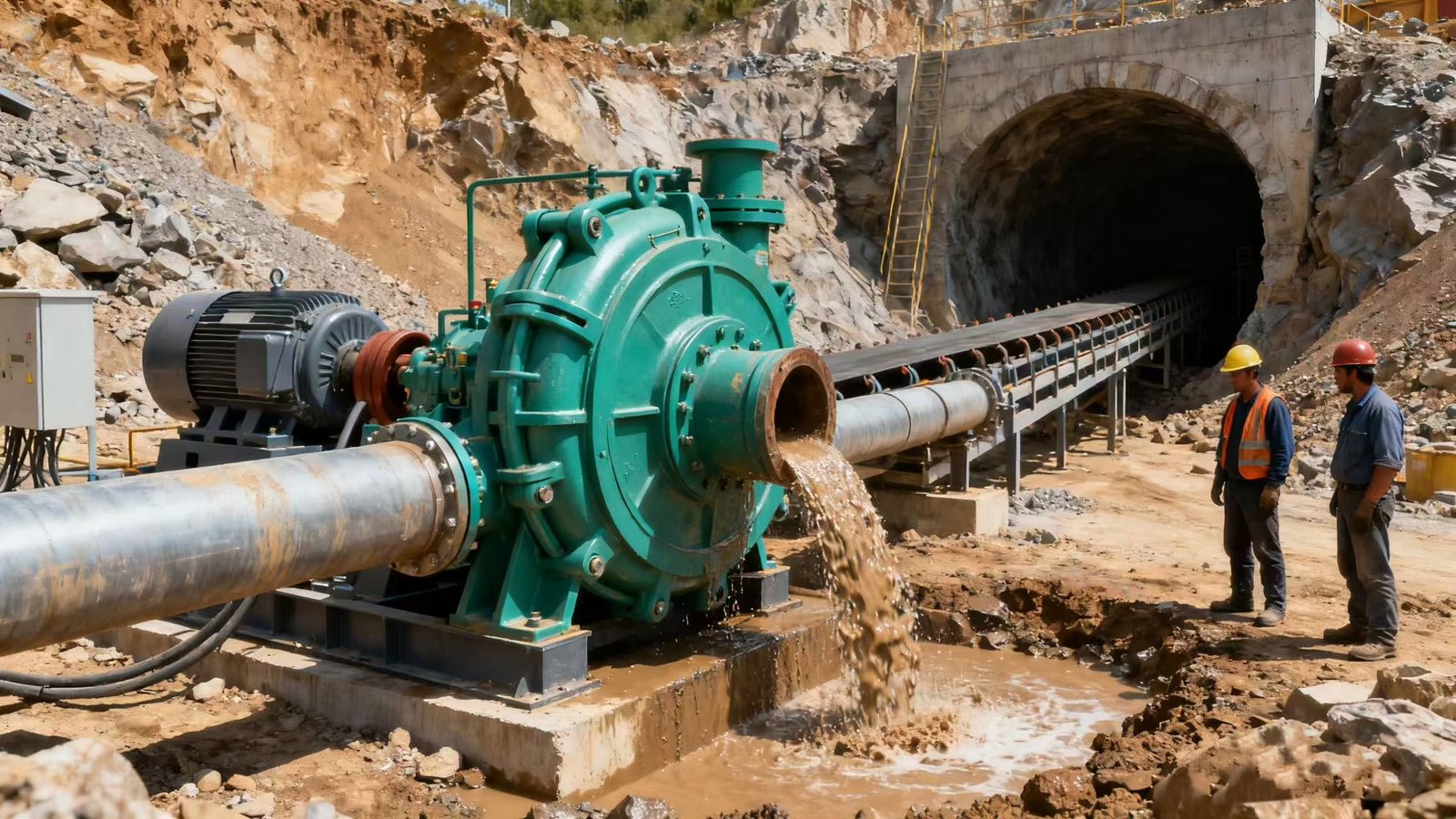
Now, why do we even need slurry pumps? Let’s think about real-life jobs. Mines use slurry pumps a lot. They move the mix of dirt and water that comes from digging for minerals. Construction sites need them too—they clear out muddy water from holes or move gravel mixed with water. Even wastewater treatment plants use slurry pumps. They handle the thick, solid-laden water that needs cleaning. Without slurry pumps, these jobs would be way harder, slower, and more expensive. So slurry pumps are a big help for many important tasks.
How Are Slurry Pumps Different From Regular Pumps?
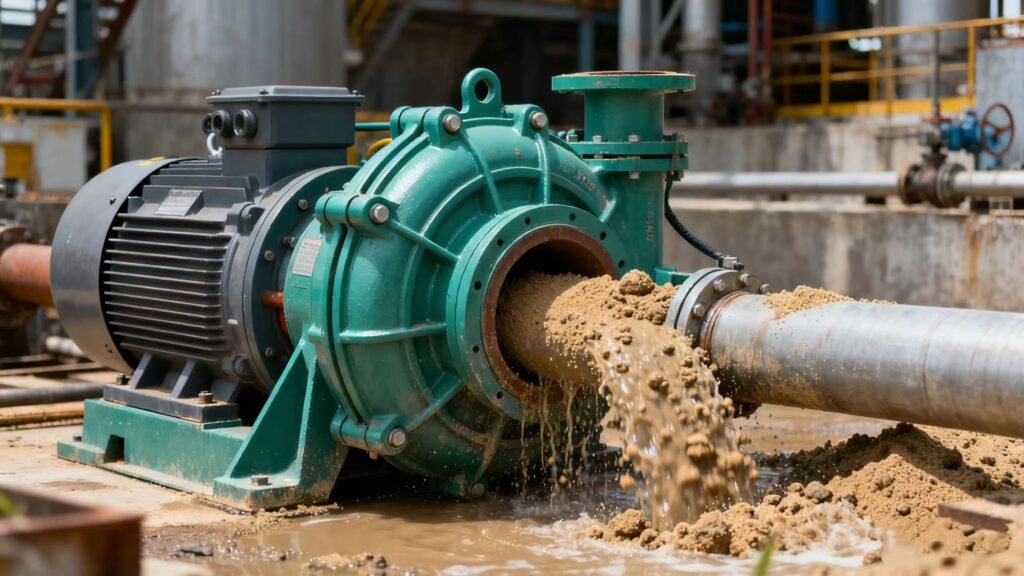
Next, let’s talk about what makes a slurry pump different from regular pumps. First, slurry pumps have stronger parts. The inside of the pump—like the impeller (the part that spins to move liquid)—is made of tough materials. These materials can stand up to the solid particles scraping against them. Regular pumps have softer parts that would get worn out fast. Also, slurry pumps have bigger openings. This lets the solid particles pass through easily without getting stuck. Regular pumps have smaller openings that would clog up with slurry. So those two things—tough materials and big openings—make a slurry pump unique.
What Materials Are Slurry Pumps Made Of?
What materials are slurry pumps made of, exactly? Let’s break that down. The most common material is rubber. Rubber is good because it’s flexible and can handle small to medium solids. It doesn’t get scratched as easily as some other materials. Then there’s metal—like high-chrome steel. This metal is super hard. It’s great for slurry with sharp or heavy solids, like small rocks. Some slurry pumps also use polyurethane. That’s a strong plastic-like material. It’s light but tough, and it works well for corrosive slurries (slurries that can eat away at metal). So the material of a slurry pump depends on the type of slurry it will move.
The Main Parts of a Slurry Pump
Now, let’s look at the main parts of a slurry pump. Every slurry pump has an impeller first. The impeller spins really fast. When it spins, it creates force that pushes the slurry through the pump. Then there’s the casing. The casing is the outer shell that holds the slurry. It guides the slurry from the impeller to the outlet. Slurry pumps also have a shaft. The shaft connects the impeller to the motor. It spins the impeller so the pump can work. Finally, there’s the seal. The seal keeps slurry from leaking out of the pump where the shaft meets the casing. All these parts work together to make the slurry pump move slurry.
How to Pick the Right Slurry Pump
How do you pick the right slurry pump for a job? That’s a key question. First, you need to look at the slurry itself. How thick is it? Are the solids big or small? Are the solids sharp or smooth? For example, if the slurry has big, sharp rocks, you need a slurry pump with a high-chrome steel impeller. If the slurry is thin with small particles, a rubber-lined slurry pump works better. Then, think about how far you need to move the slurry. Do you need to push it up a hill or just across a flat area? That tells you how strong the slurry pump needs to be. Picking the right slurry pump means it will work better and last longer.
How to Install a Slurry Pump Correctly
Let’s talk about how to install a slurry pump correctly. First, you need to pick a flat, stable spot. If the pump is wobbly, it won’t work right and might break. Then, make sure the pump is close enough to the slurry source. If it’s too far away, it might not pull the slurry in properly. You also need to connect the pipes correctly. The pipes should be the right size—too small, and the slurry will get stuck; too big, and the pump won’t push the slurry well. Finally, check that the motor is connected right. A wrong connection can damage the slurry pump. So taking time to install it right is important.
What about maintaining a slurry pump? Regular maintenance keeps it working for a long time. First, check the pump for leaks often. If you see slurry leaking, fix the seal right away. Leaks can make the pump work harder and wear it out faster. Then, clean the pump regularly. Even though slurry pumps are made for solids, small particles can build up inside. Cleaning them out stops clogs. You also need to check the impeller. If it’s worn down from scraping solids, replace it. A worn impeller can’t move slurry as well. Finally, lubricate the parts that move. This reduces friction and keeps the slurry pump running smoothly.
How to Maintain a Slurry Pump
Common Slurry Pump Problems (and How to Fix Them)
What problems do slurry pumps have, and how do you fix them? One common problem is clogging. If the pump stops moving slurry, check the openings. Solids might be stuck there. Turn off the pump, take out the stuck solids, and then turn it back on. Another problem is a worn impeller. If the pump is making loud noises or not moving much slurry, the impeller might be damaged. Replace the impeller with a new one that’s right for your slurry. Leaks are another issue. If slurry is leaking, the seal is probably broken. Replace the seal to stop the leak. Fixing these small problems fast keeps the slurry pump working.
Slurry Pumps in Different Industries
Can slurry pumps be used in different industries? Absolutely—they’re super versatile. We talked about mines earlier, but let’s go deeper. In mining, slurry pumps move ore slurries (mixes of minerals and water) from the mine to processing plants. In agriculture, some farms use slurry pumps to move manure slurry. This helps spread fertilizer on fields easily. In the oil and gas industry, slurry pumps move drilling mud—this mud cools the drill bit and carries away rock fragments. Even in power plants, slurry pumps move coal slurry (coal mixed with water) to the boilers. So no matter the industry, if there’s slurry to move, a slurry pump is useful.
When to Replace a Slurry Pump
How do you know when it’s time to replace a slurry pump? There are a few signs. First, if you’re fixing it all the time. If you’re replacing seals, impellers, or other parts every few weeks, the pump is probably too old. It’s cheaper to get a new slurry pump than to keep fixing the old one. Second, if it can’t keep up with the job. If the slurry pump used to move a lot of slurry but now moves only a little, it’s worn out. Third, if it’s making strange noises—like grinding or rattling. Those noises mean parts are broken inside, and replacing the whole pump is better. A new slurry pump will work faster and more reliably.
Final Tips for Using Slurry Pumps
Let’s wrap this up with some final tips for using slurry pumps. Always read the manual first. Every slurry pump is a little different, and the manual tells you exactly how to use it. Never use a slurry pump for something it’s not made for—like moving pure water or thick cement. Using it wrong can break it. Keep extra parts on hand, like seals and impellers. That way, if something breaks, you can fix the slurry pump fast. And finally, train anyone using the pump. Make sure they know how to start it, stop it, and check for problems. Following these tips will make your slurry pump last longer and work better.