Slurry Pumps (Simple Version)
If you often work with liquids containing solids—think wet sand, muddy water, or even small stones—you’ve likely heard of slurry pumps. A slurry pump is a device specifically designed to transport this thick, solid-laden mixture (which we call “slurry”) from one location to another. Regular water pumps can’t handle these solids—they’ll clog up quickly—but slurry pumps don’t have this issue. That’s why countless jobs and industries rely on slurry pumps every single day.
What Exactly Is a Slurry Pump?
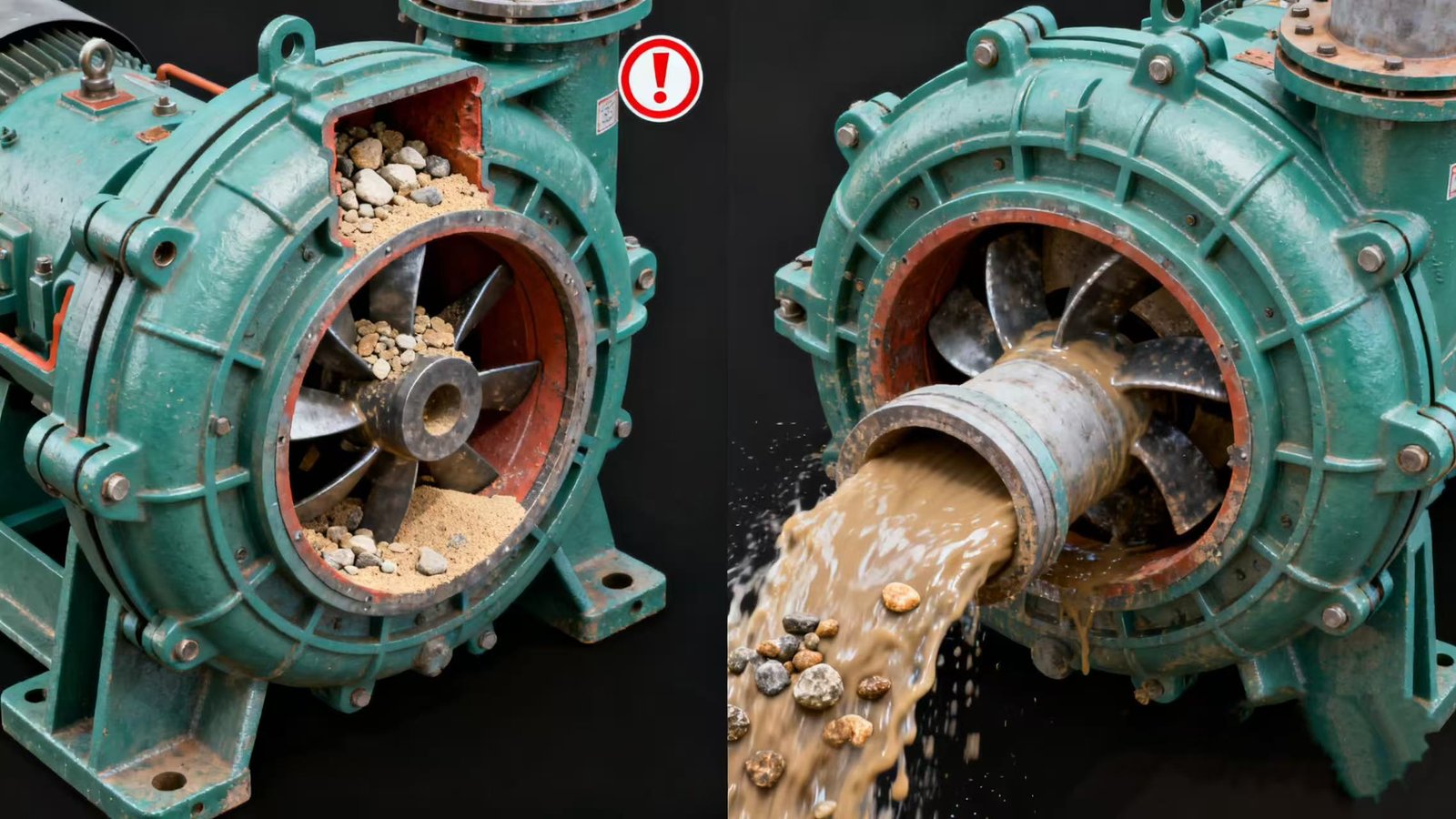
Let’s break it down simply: a slurry pump isn’t like the regular pumps you might use for clean water. Pour sand or gravel into a regular pump, and it will clog immediately. But slurry pumps are built tough to handle such messes. They have durable components that can push thick slurry through pipes without getting stuck.
Think of it like a bicycle versus a truck—you can’t carry a pile of bricks on a bicycle, but a truck is made for heavy loads. Slurry pumps do the same for thick, solid-filled liquids.
Why Bother Using a Slurry Pump?
Slurry pumps solve a major problem: moving slurry by hand or with regular tools is a nightmare. Imagine carrying buckets of wet mud across a construction site—your arms would tire, you’d make a mess, and it would take forever. Slurry pumps make this work easy.
They move large amounts of slurry quickly, so workers don’t have to lift heavy loads or waste time. Plus, they keep the entire process clean and safe. Without slurry pumps, many jobs would take twice as long (or more) and be far more dangerous.
Where Are Slurry Pumps Actually Used?
Slurry pumps are everywhere—you just might not notice them.
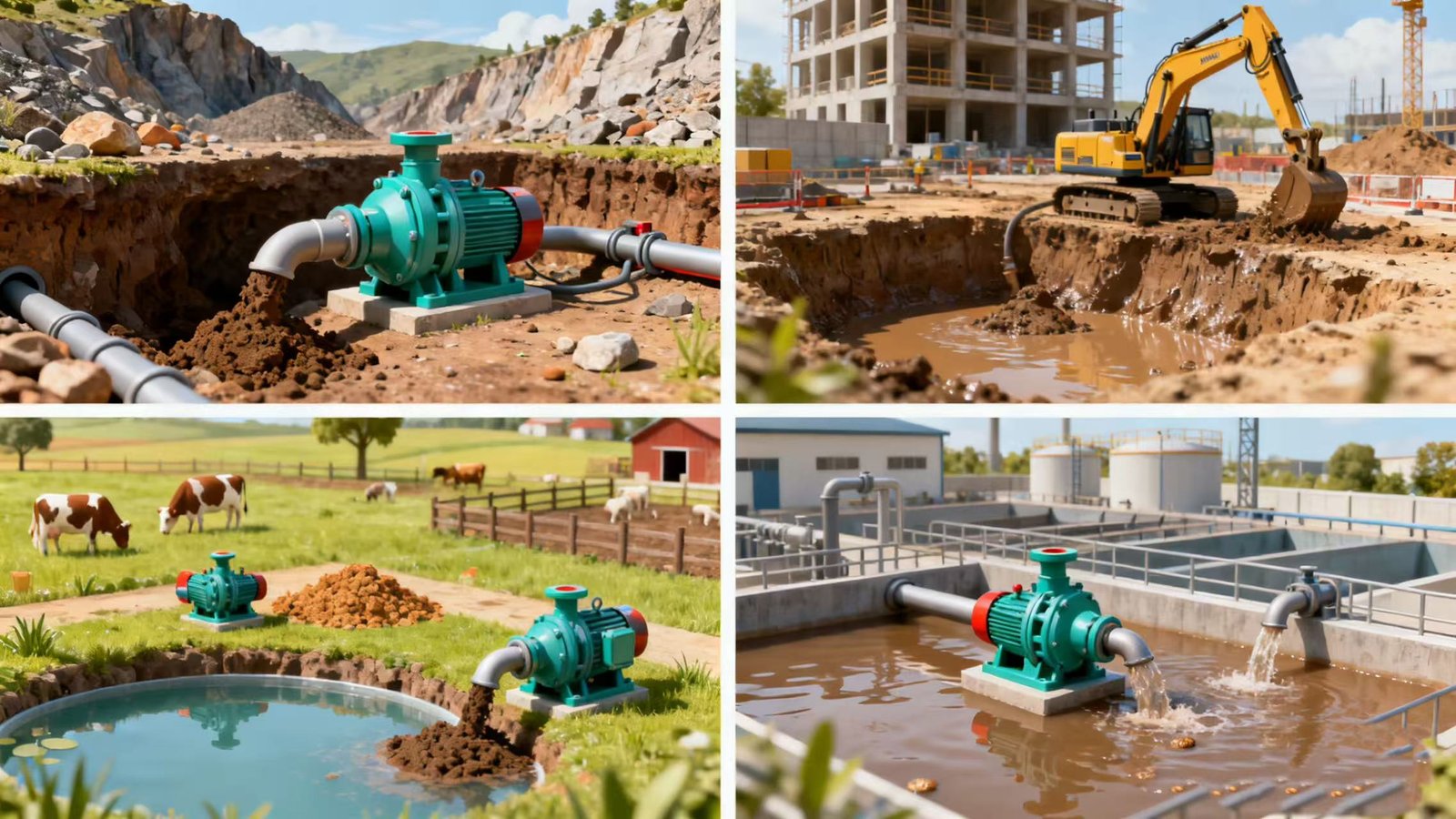
- Mines use large slurry pumps to move dirt and minerals from underground up to the surface.
- Construction sites use them to clear mud from the holes they’re digging.
- Farms even use smaller slurry pumps to transport animal waste (which later becomes fertilizer).
- Wastewater treatment plants also depend on slurry pumps to process dirty water containing solids.
Basically, any place that deals with thick, solid-filled liquids needs slurry pumps to get the job done.
What Are the Key Parts of a Slurry Pump?
You don’t need to be an expert, but knowing the main parts of a slurry pump helps you understand how it works:
- Impeller: A rotating component that pushes the slurry forward, similar to a propeller in a boat.
- Casing: A strong outer shell that holds the slurry and ensures it flows in the correct direction.
- Inlet: The opening where slurry enters the pump.
- Outlet: The opening where slurry exits the pump.
All these parts work together to keep the slurry pump running smoothly, no matter how thick the slurry is.
How Does a Slurry Pump Actually Work?
It’s much simpler than you might think:
- First, connect the slurry pump to a pipe that leads to the slurry you need to move.
- When you turn the pump on, the impeller starts spinning rapidly.
- This spinning creates a force that pulls slurry into the inlet.
- The impeller then pushes the slurry through the casing and out of the outlet pipe.
The whole process runs continuously—so as long as the pump is on, it keeps moving slurry without slowing down. That’s why slurry pumps are perfect for jobs that require steady, long-term operation.
Are There Different Types of Slurry Pumps?
Yes, there are a few main types of slurry pumps, each designed for a specific task:
- Centrifugal slurry pump: The most common type, which uses the rotating impeller we mentioned earlier. It works for most everyday jobs.
- Positive displacement slurry pump: Uses gears or pistons to push slurry, making it better for extra-thick slurry that’s hard to move.
Some slurry pumps are small enough for tight spaces, while others are large for major mining or construction projects. Choosing the right one depends on the type of slurry you’re moving and the volume of it.
How Do You Choose the Right Slurry Pump?
Choosing the right slurry pump isn’t guesswork—you just need to answer a few simple questions:
- What’s in your slurry? Is it sand, rocks, or something else? The solids in the slurry will determine how strong the pump needs to be.
- How much slurry do you need to move? A small farm might only need a pump that moves 10 gallons per minute, but a mine might need one that moves 1,000 gallons per minute.
- How far do you need to move the slurry? Longer distances mean the pump needs more power to push the slurry that far.
Answering these questions will help you find the perfect slurry pump for your needs.
How Do You Maintain a Slurry Pump?
Maintaining a slurry pump is crucial—do it right, and the pump will last for years:
- Regularly check the pump for leaks or loose parts. Slurry is abrasive, so components can wear out over time.
- Clean the pump after each use, especially if the slurry is sticky (like wet clay).
- Add oil to moving parts (such as the impeller) to keep them running smoothly.
- If you hear unusual noises from the pump or notice it’s moving less slurry, fix the issue right away—small problems with slurry pumps quickly turn into big, expensive ones.
- What Are Common Problems With Slurry Pumps?
Even the best slurry pumps have issues sometimes, but most are easy to fix:
- Clogging: If the slurry contains large solids, they may get stuck in the inlet or impeller. Fix this by turning off the pump and removing the stuck solids (always wear gloves for safety).
- Worn parts: Since slurry is abrasive, the impeller or casing can get scratched or dented. Replace these parts to restore the pump’s performance.
- Pipe leaks: Leaks around the pipes are also common—tightening the pipes usually fixes this.
- How Long Can a Slurry Pump Last?
Slurry pumps can last a long time, but it depends on how you use them and how well you maintain them:
- A well-maintained slurry pump used for light tasks (like a small farm’s fertilizer work) can last 5 to 10 years.
- A slurry pump used for heavy tasks (like mining) may only last 3 to 5 years, as it’s under more strain.
The type of slurry also matters—slurry with sharp rocks will wear out the pump faster than slurry with soft mud. Taking good care of your slurry pump saves you money by delaying the need for a replacement.
Do You Need Special Training to Use a Slurry Pump?
You don’t need a college degree to use a slurry pump, but you should learn the basics first:
- Most companies will show you how to turn the pump on and off, check for problems, and clean it.
- You also need to know how to stay safe—always wear gloves and safety glasses when working with slurry, as it can be messy or contain sharp solids.
If you’re unsure about something, just ask a professional. Using a slurry pump safely is just as important as using it correctly.
Final Thoughts on Slurry Pumps
Slurry pumps might not be the most exciting devices, but they’re essential for countless jobs. They transport thick, solid-filled liquids that regular pumps can’t handle, making work faster, easier, and safer. Whether you’re in mining, construction, farming, or wastewater treatment, slurry pumps help you get the job done without hassle.
Just remember to choose the right slurry pump for your needs, maintain it regularly, and use it safely—and it will serve you well for years. Now you know all the key facts about slurry pumps, so you can talk about them with confidence!